Work with The Winning Practice and directly with Charlie. The engagement follows the business objective, not the other way around.
Selective engagements. Direct involvement. Accountable delivery.
01
Executive advisory
A consequential decision needs perspective, challenge and clarity.
Direct counsel to founders, CEOs and leadership teams on strategic priorities, commercial decisions, leadership effectiveness and ownership transitions.
A defined advisory mandate, with an agreed cadence and clear decision priorities.
Programs are tailored to the business context. Detailed scope, participation and deliverables are agreed before work begins.
Strategy & cultural foundation
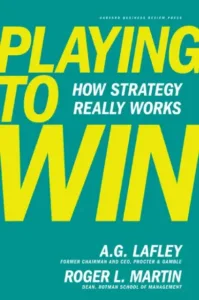
Playing to Win
Begin with a current-state SWOT and an audit or creation of Vision, Mission, Values, Goals and Key Enablers. Then align five strategic choices with a cultural declaration that anchors execution.
The focus
Clear direction, shared behaviours and accountability for results.
Powered by the 20–60–20 Talent Calibration methodology. Connect assessment and peer calibration with individual development actions, leadership accountability and recurring progress reviews.
The focus
A repeatable leadership framework that aligns people, culture and performance with strategy.
We test existing declarations for relevance and alignment, refresh what no longer serves the business, and create what is missing. These are working commitments, not statements written once and filed away.
Current-state SWOT
An honest assessment of strengths, weaknesses, opportunities and threats, grounded in today’s business and market realities.
Vision
The future the organization intends to create and what it aspires to become.
Mission
Why the business exists, whom it serves and the value it is here to deliver.
Values
The behaviours and standards that guide decisions, leadership and the way people work together.
Goals
The outcomes that translate ambition into clear, measurable priorities.
Key enablers
The people, resources, technology, partnerships and conditions needed to make the future possible.
02 / MAKE THE STRATEGIC CHOICES
Fiveconnectedchoices.Onecoherentstrategy.
The Strategy Choice Cascade is interrelated, not a one-way checklist. Choices are revisited as the leadership team tests their fit and feasibility.
The five-level Strategy Choice Cascade
01
Winning aspiration
Define what winning means for the business, its customers and its people.
↕
02
Where to play
Choose the customers, markets, offerings and channels to pursue and those to leave aside.
↕
03
How to win
Determine why customers will choose you and how you will create a defensible advantage in those markets.
↕
04
Capabilities
Identify the distinctive capabilities the strategy requires, then decide what to build, strengthen, partner for or acquire.
↕
05
Management systems
Establish the measures, governance and operating routines that sustain those capabilities and support the strategic choices.
Connected choices. Test, learn and revisit in both directions.
Alongside the strategy, we articulate the culture required to execute it: how leaders behave, how decisions are made, how people work together and how commitments are honoured.
Values become observable expectations. Goals connect to priorities and named owners. Management cadence makes progress, obstacles and accountability visible. Trust and empowerment are balanced by responsibility for results.
Powered by the 20–60–20 Talent Calibration methodology.
Unlock the Magic Middle. Elevate the whole team.
Develop your top performers as multipliers. Build the capability and ambition of the people around them.
Work with The Winning Practice to combine performance history with leadership judgment and peer calibration. Turn a clearer view of talent into targeted development, stronger succession readiness and the capacity to deliver your strategy, not simply a record of past performance.
This is a recurring leadership framework, not a software platform or a one-time performance review. Playing to Win establishes the strategy; the Talent Operating System aligns people and performance with its execution.
The opportunity in the Magic Middle
3×
Thepotentialaggregateuplift.
A modest improvement across more people can have a much larger effect on the whole team.
Same 5% improvement. Different team-wide impact.
Middle 60%60% of the team × 5% improvement
3%
Top 20%20% of the team × 5% improvement
1%
0%1%2%3%
Illustrative increase in total team output
Illustrative calculation, assuming equal starting contribution per person and a 5% improvement within either group, with everyone else unchanged. Actual impact depends on starting productivity and improvement achieved. This is not measured ROI or a guaranteed result; coaching costs are not included.
Activate top performers as multipliers. Develop the Magic Middle, not one at the expense of the other.
Explore the potential with your team
Develop the middle 60% 3%Equivalent to 3 people’s baseline output.
Develop the top 20% 1%Equivalent to 1 people’s baseline output.
Assumes equal starting contribution per person, the same relative improvement within either group, and everyone else unchanged. Nothing entered here is submitted or saved.
01 / ASSESS FOUR DIMENSIONS
Seethewholecontribution.
Results matter. So do capability, ambition and the way those results are achieved.
Skills
The capability and expertise people bring to their roles and the skills the future business will require.
Ambition
The desire to grow, take on responsibility and contribute at a higher level.
Alignment to cultural values
How consistently people demonstrate the behaviours and standards the organization has declared.
Performance
The results people deliver, considered alongside their performance history and role expectations.
Different needs. Different support.
Similarresults.Differentpathsforward.
Someone with strong skills but limited ambition needs a different conversation from someone highly motivated who needs to build capability. The Skills × Ambition lens helps leaders choose the intervention, not just assign a ranking.
Skills × Ambition / Development lens
SKILLS ↑
Higher skills · Lower ambition
Motivate & mentor
Reconnect capability with purpose. Explore motivation, confidence and the opportunities that make growth meaningful.
Higher skills · Higher ambition
Stretch & multiply
Offer meaningful challenges. Where there is a fit, enable strong contributors to mentor others and transfer what works.
Lower skills · Lower ambition
Coach & reassess fit
Understand the barriers. Clarify expectations, provide support and review progress against explicit commitments.
Lower skills · Higher ambition
Train & teach
Match motivation with targeted learning, practical experience and coaching that closes specific capability gaps.
Lower ambitionAMBITION →Higher ambition
A coaching lens, not a standalone score or employment decision. Performance and cultural alignment remain essential to the four-dimensional assessment. Quadrants do not automatically assign people to the 20/60/20 groups.
02 / CALIBRATE WITH PEERS
Testtheassessment.Challengetheblindspots.
01
Establish the evidence
HR provides available performance data, including the past three years of ratings where applicable, through the 20–60–20 Input Tracker.
02
Make the leadership assessment
Each leader stack-ranks their team across the four dimensions, with 1 representing the highest ranking. A five-slide summary brings the performance history and four dimension rankings together for review.
03
Calibrate and agree
Experienced peer leaders share observations, challenge assumptions and reconcile differences. Qualitative judgment and quantitative evidence inform a ratified overall ranking, while surfacing potential biases and blind spots.
03 / TURN INSIGHT INTO ACTION
Differentneeds.Deliberateleadershipresponses.
The 20–60–20 lens directs attention to three groups and the distinct support each needs.
Conceptual 20/60/20 segmentation, not a measured distribution or mandatory quota. Every group deserves deliberate leadership attention.
20%
The Eagles
Recognize, stretch and multiply impact.
Identify leading contributors and emerging potential. Explore greater responsibility and whether their strengths are best applied through mentoring others or exceptional individual contribution.
60%
The Magic Middle
The greatest opportunity for collective lift.
Focus leadership attention on motivation, coaching, and the transfer of skills and knowledge. Help capable people raise their contribution through clearer expectations and purposeful development.
20%
Focused intervention
Address gaps. Establish accountability.
Bring performance or alignment concerns into the open. Provide timely coaching, explicit expectations and follow-through; where improvement does not occur, address role fit and the necessary people decisions.
The value lies in what leaders do next: recognize contribution, transfer knowledge, develop capability and address gaps. Cultural alignment belongs alongside performance, not as an afterthought.
Translate calibration into individual development actions with clear outcomes, named owners and agreed review dates. Leaders remain accountable for coaching, commitments and follow-through.
At recurring progress reviews, assess results against those commitments, adjust support and revisit the talent assessment as people and business priorities evolve. Agree the review cadence to suit the organization. Assessment, calibration, action and review become a continuing leadership discipline.
Calibrated talent view
Individual development actions
Leadership accountability
Recurring progress reviews
Build the team your future strategy requires, not simply a record of past performance.
Understand the business, its performance, its constraints and the future leadership wants to create.
02
Choose
Identify the strategic choices and trade-offs that deserve leadership attention.
03
Align
Establish ownership, required capabilities, priorities and the measures of progress.
04
Execute
Review results, challenge assumptions and support leadership follow-through.
Strong involvement. Clear boundaries.
TWP contributes judgment, structure and agreed execution support. Your leadership team retains ownership of the business and its commitments. Any expanded operating role is a deliberate, separately defined decision.
Your next chapter
Let’sdefinetheworkthatmatters.
Bring the objective and the context. We’ll discuss the right involvement, responsibilities and measures of progress.